
Why Your Food Budget Keeps Shrinking: And It’s Not About Farming
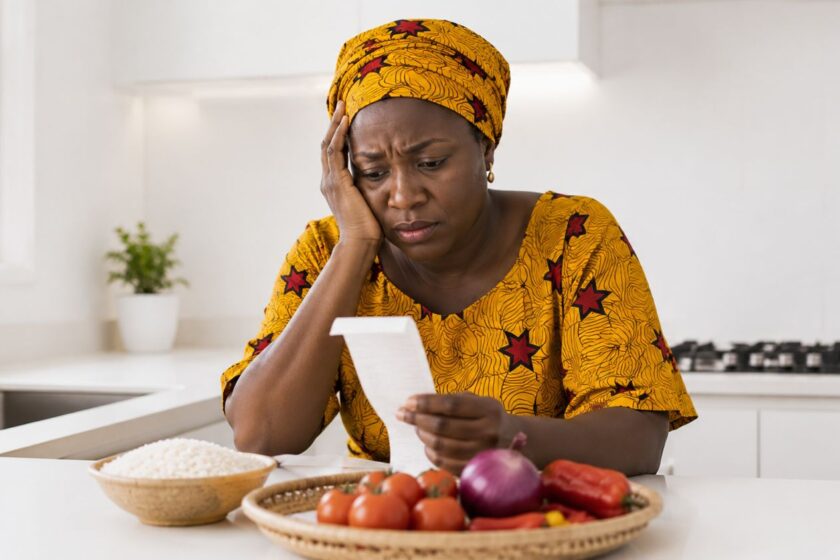
If you have walked into a Nigerian market in the last six months and felt your budget stretch thinner with every visit, you are not imagining it. Food prices stayed stubbornly high through 2025, eased briefly around harvest, then climbed again by March 2026.
The usual explanation blames farmers. But the real story sits somewhere else entirely: too much of what Nigeria grows never reaches the table in good condition, and everyone along the way charges the consumer for that failure.
Food Production Is a Relay Race, and Nigeria Keeps Dropping the Baton
Picture food production as a relay. The farmer grows the crop and hands it to an aggregator, who passes it to a transporter, who hands it to a processor or wholesaler, who hands it to a market trader, who finally sells it to you. When any runner in that chain stumbles, the whole race slows down. Food arrives late, spoiled, or priced higher to cover the loss.
That is precisely what is happening in Nigerian food markets today.
Agribusinesses are the runners in the middle of the race: the companies supplying fertilizers and seeds, the firms storing and processing the harvest, the logistics operators moving goods across the country. When they run well, food stays affordable and available. When they falter, prices spike and ordinary households absorb the difference at the till.
The Storage Gap Is Costing You Money
Right after harvest, markets flood with cheap produce because farmers rush to sell before it spoils. Prices dip briefly, which explains the slight easing in food inflation seen in late 2025. Within weeks, reserves run out, supply tightens, and prices shoot back up. That is exactly what happened heading into early 2026.
Proper warehouses, grain silos, and cold-chain facilities could keep supply steady across the year and smooth out these painful swings. Instead, the market lurches between temporary abundance and manufactured scarcity, and consumers absorb the full cost every time.
The scale of the problem is stark. Nigeria's post-harvest losses range between 15 and 40 percent of production, particularly for perishable crops, according to the Federal Ministry of Agriculture and Food Security's National Agri-Food Systems Investment Plan (NASIP 2026-2027). That is not a farmer's problem alone. It is a tax every household pays at the point of purchase.
Transport Quietly Taxes Every Item on Your Plate
Every item on your table carries a hidden charge from Nigeria's logistics crisis. Fuel costs, bad roads, and vehicle upkeep all add to the cost of moving food from farm to market, and those costs land directly on the buyer. A truck that should complete three trips a week might manage just one. That inefficiency gets priced into every kilogram of rice, every crate of eggs, every bag of flour. It is invisible, but relentless.
Big Processors Set the Pace, Often Against Consumers
A handful of large processing companies effectively determine the prices of staples like bread, flour, and vegetable oil. When their input costs rise, particularly as a weak Naira makes imported raw materials more expensive, prices climb fast. When costs ease, prices rarely fall at the same speed.
This one-way pricing pattern pushes food costs upward over time, even after the original shock has passed. The consumer ends up carrying the margin buffer that processors build in against future uncertainty.
Where the Problem Was Named
On April 22 and 23, 2026, Nigeria's leading agricultural researchers, agribusiness operators, and food security experts gathered at the NAF Conference Centre, Abuja, for Post-Harvest Connect 2026. The event, organized by the Nigerian Stored Products Research Institute (NSPRI) to mark 75 years of post-harvest research, carried the theme “Scaling Postharvest Technologies for Enhanced Productivity and Competitiveness.” The theme itself was an admission that Nigeria's food problem does not end at the farm gate. It runs the full length of the value chain, all the way to the consumer.
Three discussions from the conference speak directly to the food price crisis:
Scaling solar drying and grain storage technologies.
Practical, deployable solutions such as parabolic solar dryers and inert atmosphere silos already exist and are being rolled out across Nigeria's agro-ecological zones. The barrier is not invention, it is adoption. Getting these tools into the hands of smallholder farmers and small agribusinesses at scale remains the real bottleneck.
Commercializing under-utilized crops.
Nigeria sits on an untapped supply of affordable, nutritious food the market has barely touched. Crops like African breadfruit, tiger nuts, and locust beans carry far lower price pressure than conventional staples and represent a direct opportunity to ease pressure on stretched food budgets.
Cassava, yam, and banana value chains.
Dedicated sessions examined the specific crops where post-harvest losses run highest and price volatility hits hardest, both for everyday consumers and for food businesses operating on thin margins.
The consensus across every session was consistent. Nigeria's food price crisis is, at its core, a post-harvest crisis. Fixing it takes coordinated action across storage, processing, logistics, and market linkages, not just more farming.
What This Means If You Run a Food Business
For SME owners in food, caterers, restaurant owners, market traders, small processors, these dynamics hit margins directly and daily. A few practical moves worth making:
More insights



Subscribe to Impacter Digest Newsletter
New insights on agrifood SMEs, nutrition, and food systems — straight to your inbox.